Editors
Most people don't give a text editor a second thought, flame wars have been fought over editors. Here are a few thoughts on a small handful of the plethora of editors out there on various operating systems.
I don't recall any specific editors except SpeedScript for the C64 that weren't part of a particular software package. I don't think they even pretended to have a standard. I vaguely recall references to WordStar key bindings, but I didn't use WordStar.
In high-school we used Tandy Model III/IV which still had different editors depending on your environment. In college I was introduced to DEC's VAX/VMS and EDT, and UNIX's vi editors. So while there were options, there actually were standards.
For those that have worked on both VMS and UNIX, using CTRL-Z to change modes and tracking special key combinations on VMS' EDT, while also using vi on a UNIX system, where CTRL-Z backgrounds a process, and the hard part was mastering 'h', 'j', 'k' and 'l' to move around, was a bit confusing. Fortunately, I learned vi.
On my home computer I used edlin and was happy using MS-DOS EDIT when it was available. I preferred IBM EDIT which looked similar but allowed multiple files. When I switched to windows 3.1 I found UltraEdit and used that for a few years.
When I started playing with Linux and NetBSD, I did a lot of distro hopping and ended up using vim. I used it for years and even found a version for when I was working in DOS.
I understood the confusion with a modal editor and there were times where I did want to reach for a rodent. When looking at LISP it gave me the push I needed to check out Emacs. While I haven't yet got a handle on LISP, I liked Emacs.
I liked the fact that while Emacs was a graphical program it could fall back on text if needed. (I remembered the clunky looking XEmacs from RedHat 7.2 too.) GNU Emacs is a lot prettier, but XEmacs will work in a pinch. Dired mode is fantastic and actually beats using a conventional graphical file manager to rename a number of files.
I actually found a manual for EDT and realize I may not have given it a fair shake, but it doesn't appear to be that interested in one. I've found two VAX accounts and both shut down pretty quickly. While EDT works on linux it messes with the keymap for the numeric keypad and does not clean up after itself well. I'm not willing to log out after an editing session to reset the keyboard.
EDT actually reminded me of Plan 9's sam editor, which reminded me of acme. While I had played around with wily, a linux port, a little, it was kind of ugly, and I really didn't care, it wasn't like I'd use it as a primary editor. When I found out Plan 9 port included acme, I gave it a go. It was a bit bumpy getting started but I once I got fonts working, I decided to start playing with it. That led to more light programming, building tar balls, learning how to write man pages (more or less), and almost all of it was done using acme. I think I have a new favorite.
Acme
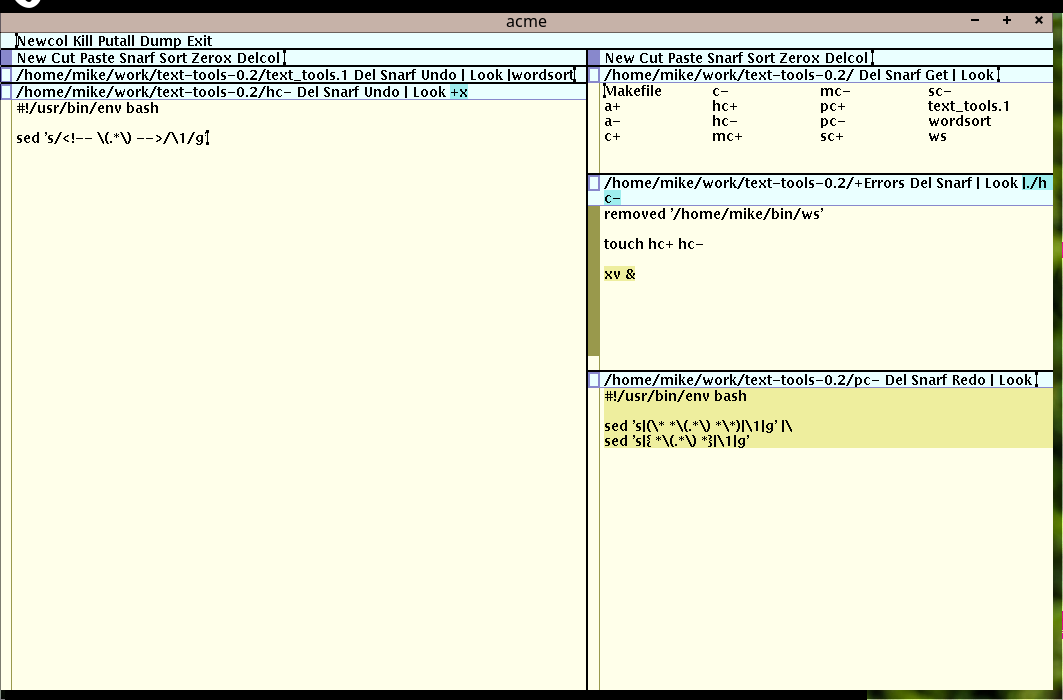
A fun little editor ported from Plan 9 that is easily expandable. You might be able to find Wily, a work-alike, in your distros' repos.
Here's a page that talks about acme a bit more.
Edlin
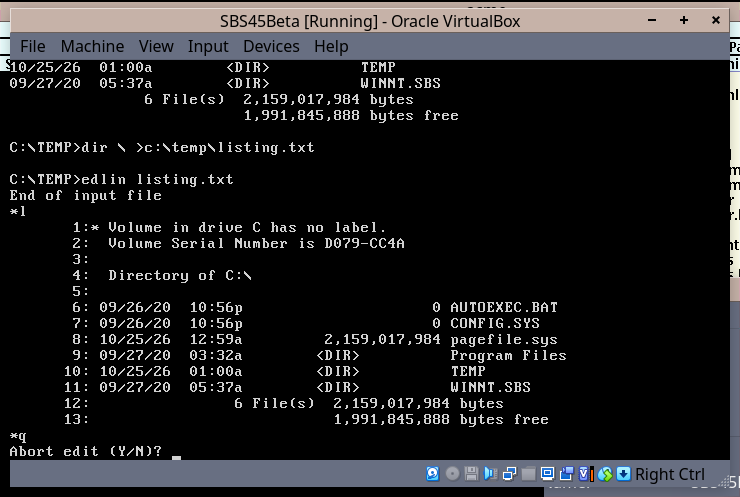
An MS-DOS program that appears to have been loosely based on Unix's ed . When you were using MS-DOS 2.11, you made do. You can program with it, don't, it's a line editor. The source code is available online.
EDT
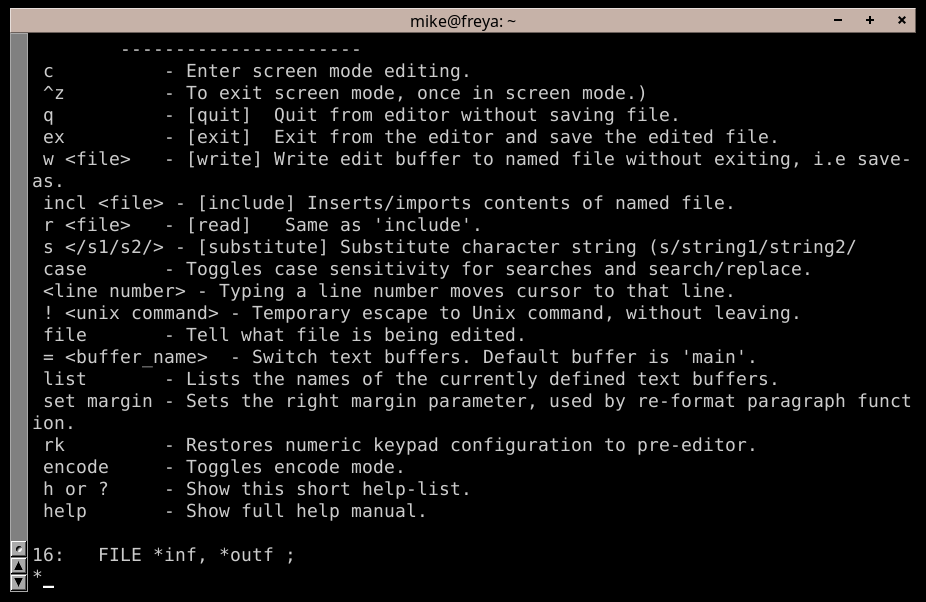
I understand this was a good editor for VMS. It made heavy use of the extended keypad on the terminals. Suffice it to say that I preferred mail's text editor at the time. I found learning vi more user friendly. It can be found online.
Emacs
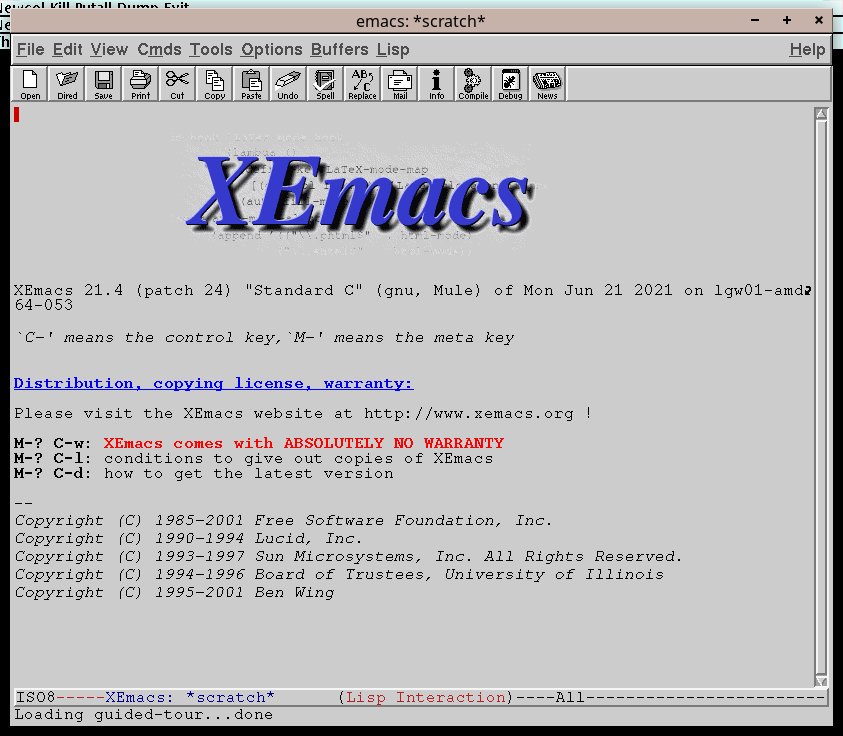
Emacs is great programming environment. It has something for everyone, and probably is close to an operating system. It's available on most systems and has spawned a handful of versions. It can be used in a text terminal or on a GUI. You'll find Gnu Emacs available on most modern systems. It was my favorite for several years.
(Yes, XEmacs can be run in terminal mode, if you want to go to the trouble of installing it. It may not be available in your repos.)
SciTE
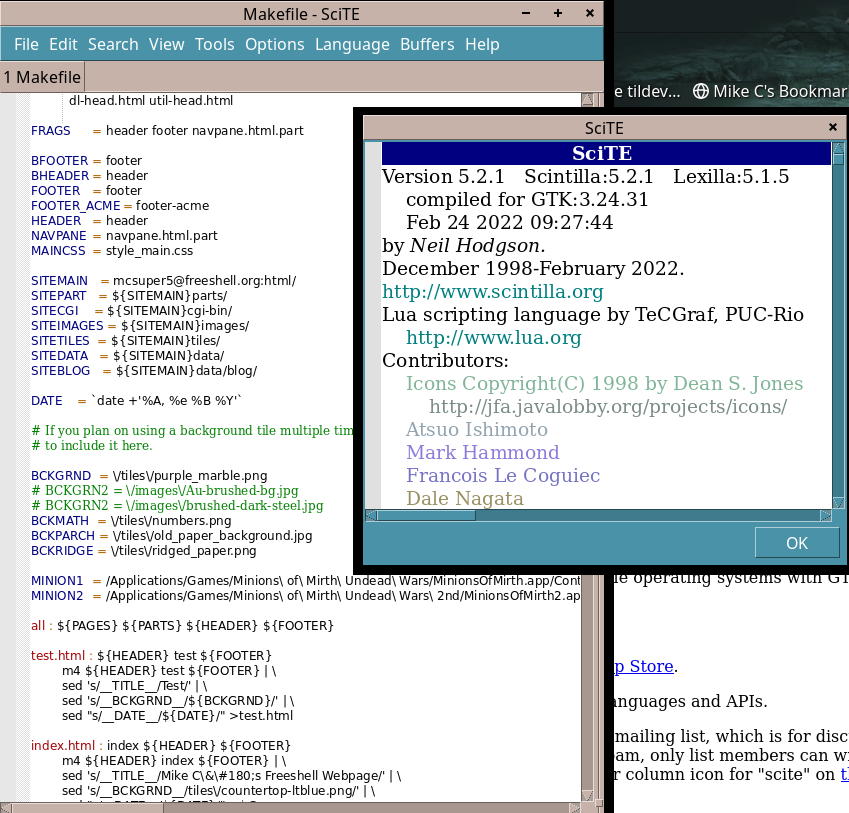
SciTE is Scintilla based Text Editor. It has a lot of features, including syntax highlighting for a number of programming languages, and is easily configurable.
TextEdit
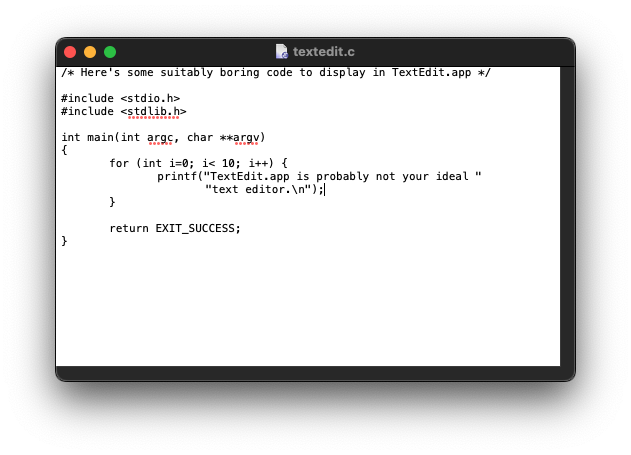
TextEdit from NextStep made it's way into OS X as the primary text editor. The GNUStep version has a few bugs that prevent its use as a primary editor, like file names must end in ".txt". OS X's version appears to prefer rtf, but it will open whatever you select. It's more of a notepad type editor. If you're willing to handle manually renaming, they'll do in a pinch.
Vi
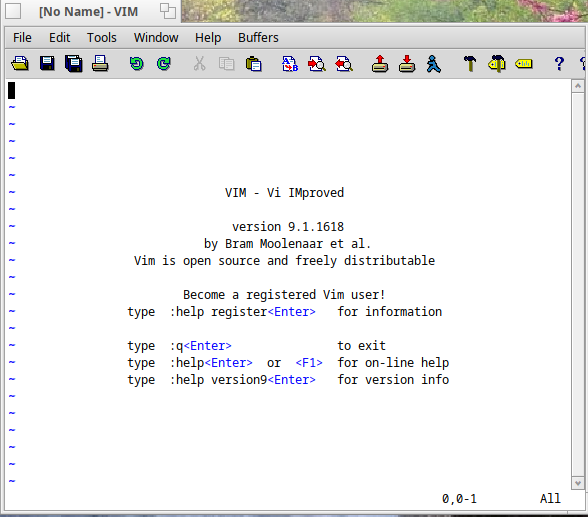
Descending from Unix's ed/ex, it's inspired vim, neovim and countless others. Vi/Vim were once found on nearly all Unix-like systems. If Vi/Vim aren't installed by default, you can almost definitely install them from your package manager.
